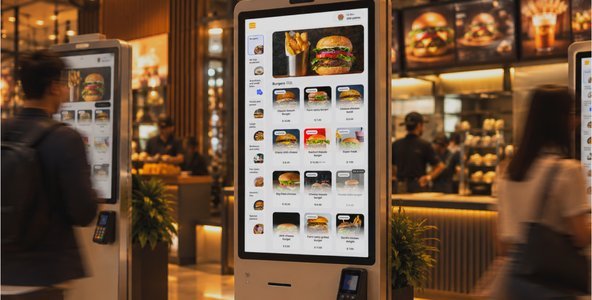
Self-Ordering Kiosk
~40% → ~90% modifier completion, 86 SUS score, and 10–15 → 3–4 staff-reported order corrections per shift
~40% → ~90% modifier completion, 86 SUS score, and 10–15 → 3–4 staff-reported order corrections per shift
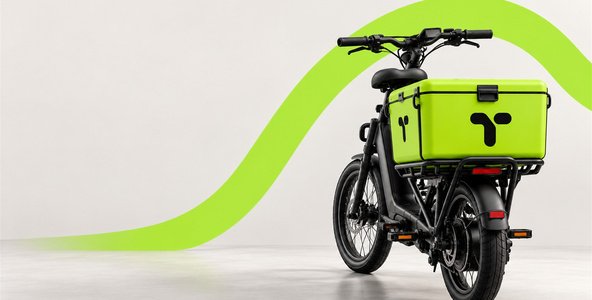
Quick local pickups + scheduled same-day delivery, connected across neighborhood zones
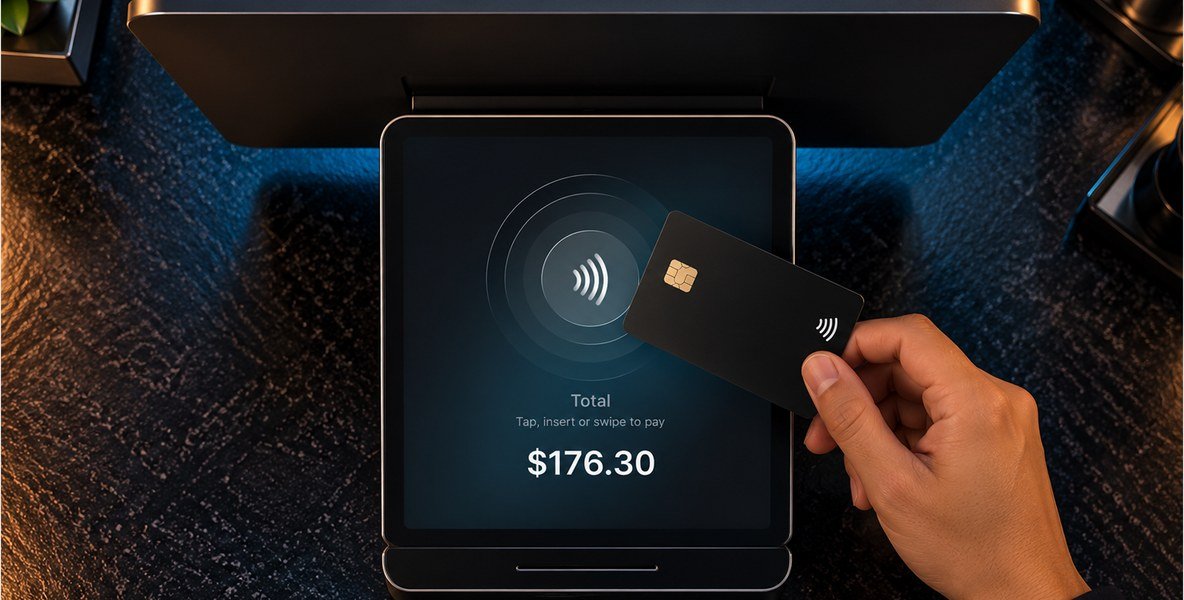
Redesigning the restobar CFD that wasn't solving enterprise needs
NOVA Echo — AI Performance Dashboard
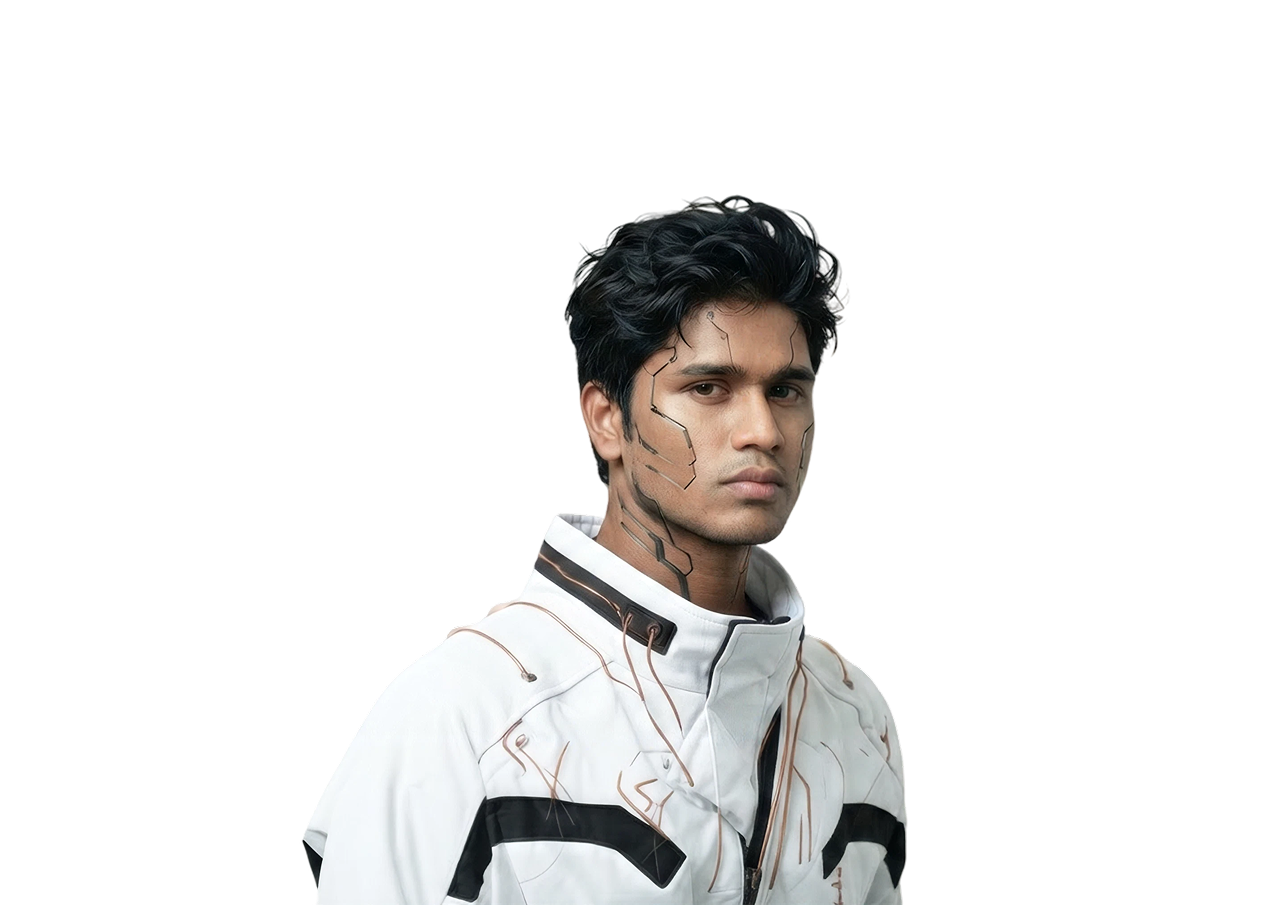
 Portrait
Senior Product Designer
Senior Product Designer with 6+ years of experience building enterprise B2B SaaS and AI products — end-to-end platforms for multi-location restaurant and retail brands, spanning POS, online ordering, self-service kiosks, kitchen display systems and back-office tools. My work supports products live across 600+ restaurant locations.
I focus on complex operational UX — permissions, payments, approvals, reporting and edge cases, not just the happy path. I also design AI-native experiences like voice AI and phone ordering, deciding when AI should act, when a person steps in, and how performance and cost are measured. I've built scalable design systems across seven device types and guide a 4-person design team. Open to Senior Product Designer roles in B2B SaaS, enterprise software, restaurant technology and AI-native products.
$4.07M
Processed in 30 days
Across 276,932 orders during a single high-volume event.
$1.3M+
ARR impact
0→1 white-label POS product taken from launch to recurring revenue.
600+
Restaurants live
Kiosk and ordering live across US locations, including 3 major enterprise brands.
4
Designers guided
Assign, review and approve work across a team of 4 designers.


Tip Screen
Custom Tip Entry
BOGO Deal Flow
Campaign Concept — Marx
Campaign Concept — Aqua
Campaign Concept — Astra
Table Selection
Video Call Widget
Start with real users, not screens
I talk to the people who use the product and the people who sell it — complaints, tickets and stakeholder goals come first. They decide what is worth designing, not a blank canvas.
Map the whole system before any UI
Before any screen gets drawn, I map roles, permissions, approvals, exceptions and failure states. The happy path is maybe 20% of the real work — the edge cases are what decide whether a product survives its first busy night.
Turn real users into AI personas. Prototype.
I capture how real users actually read and act on information, turn that into an AI persona, and run test sessions against it — so validating a direction never has to wait for a scheduling gap.
Decide how the AI should behave
Adding AI isn't a feature toggle. I decide when it should run, when a human needs to step in, what each call costs, and what happens when it gets something wrong — before any of it ships.
Align stakeholders before the first pixel
I set expectations early and bring stakeholders into the decision, not just the demo. Alignment upfront means fewer surprises in review, and a design that the business can actually sell.
Engineering-ready handoffs
Clean layer names, real components and tokens — a file built for engineering, not just for looking right. Specs, states and the reasoning behind a decision travel with it, so nobody has to guess what a hover state does or ask the same question twice.
Ship, listen, and iterate on real feedback
Shipping isn't the finish line. Support tickets, complaints and passing comments feed straight back into the next version — not as a backlog nobody reads, but as the actual starting point for what changes next.
Move at AI speed, not sprint speed
AI-assisted prototyping and testing collapse a two-week research cycle into days. The bar isn't "fast for a designer" — it's fast enough that waiting for the next sprint stops being the default.